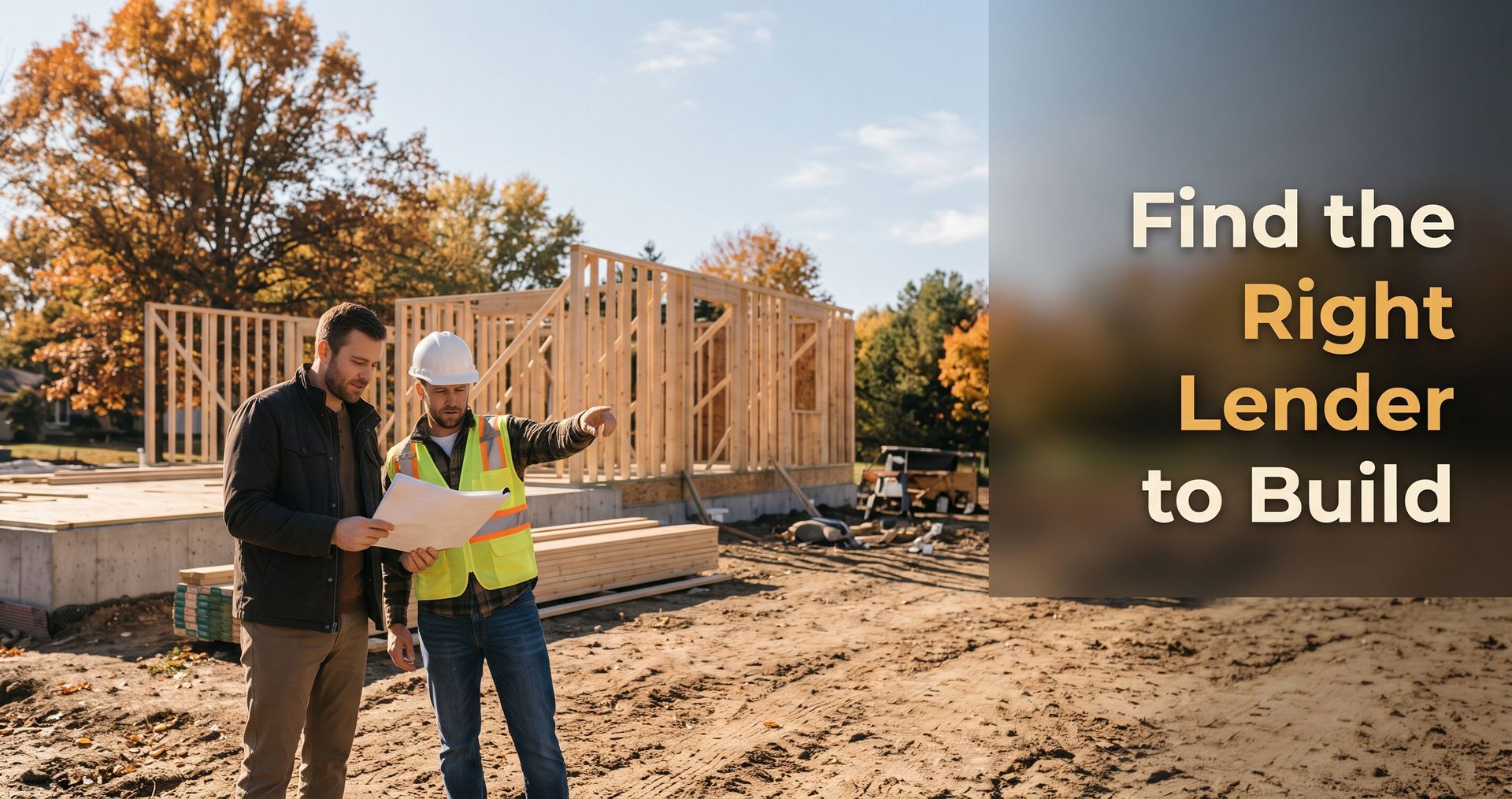
Mortgage Lenders for New Construction Homes in Wisconsin: What to Look for and How to Choose
Not all mortgage lenders handle new construction financing. The best lenders for new construction homes in Wisconsin are those who specialize in construction loans, have established relationships with builders in your area, and have a proven track record of closing on time. When choosing a lender, ask specifically about their experience with new construction, how they handle draw disbursements, and whether they have worked with your builder before.
That last point matters more than most buyers realize. I've seen deals fall apart not because of the buyer's finances, but because the lender had no idea how to coordinate with a builder. Construction lending has a completely different rhythm than a standard purchase mortgage. If your lender doesn't understand that rhythm, your builder will feel it, and eventually, so will you.
Wisconsin adds another layer. With a build season that runs roughly from April through October and permit timelines that can stretch 4 to 10 weeks, the margin for error on your financing is thin. A lender who moves slowly, asks for the same documents twice, or doesn't understand a draw schedule isn't just inconvenient. They can cost you an entire building season.
The bottom line: In Wisconsin, the right construction lender isn't just a financing source. They're a project partner. Choose accordingly.
How New Construction Mortgage Lending Differs from Resale
When you buy an existing home, the lender funds one loan at closing and the transaction is done. New construction doesn't work that way. The money moves in stages, the property doesn't exist yet when you apply, and the lender has to stay actively involved through the entire build.
That's a fundamentally different product, and not every lender is set up to handle it.
Why the Lender's Experience Matters More on a New Build
A standard purchase lender underwrites one file and closes it. A construction lender underwrites the file, approves the builder, reviews the plans and budget, orders a subject-to-completion appraisal, and then manages a draw schedule across multiple inspections and disbursements. That process requires specific systems, specific knowledge, and specific relationships.
When a lender without that experience takes on a construction loan, things break down in predictable ways:
- Draw requests sit in a queue that wasn't built for construction timelines
- The builder calls you because the inspection hasn't been scheduled and the framing crew is waiting
- Documents get re-requested because the processor doesn't know what a construction contract looks like
- The closing gets pushed because the lender missed a step in the conversion process
None of these are catastrophic on their own. But they add up, and in Wisconsin, added time has a real cost.
Builder Timelines and Why Slow Lenders Cost You Money
Wisconsin's build season is compressed. Frost depth governs when footings can go in, and from roughly November through March, excavation and foundation work essentially stop. According to data from housebuildcalc.com, a full build in Wisconsin typically takes 12 to 18 months from breaking ground to move-in, with permit approval alone taking 4 to 10 weeks.
That means every delay compounds. Miss your spring start and you may be waiting out another winter before the foundation goes in.
A lender who can't close on time, or who doesn't understand how draw disbursements work, can push your start date by months. In Wisconsin, months equal a full season. That's the real cost of choosing the wrong lender.
How to Find a Lender That Works with Your Builder
This is the question most buyers skip, and it's one of the most important ones to ask.
Why Builder-Lender Relationships Matter
A lender who has already worked with your builder knows how that builder structures their contracts, what their draw schedule looks like, and how they handle change orders. They've already built the working relationship. The paperwork flows faster, the inspections get scheduled without friction, and the builder trusts that the funds will show up when they're supposed to.
That trust isn't a soft benefit. It's the difference between a builder who prioritizes your project and one who's been burned by a slow lender before and is quietly skeptical about yours.
How to Ask Your Builder Who They've Worked With
Most builders have a short list of lenders they trust. Ask directly:
- "Which lenders have you worked with before on projects like mine?"
- "Is there a lender you prefer, and why?"
- "Have you had issues with lenders in the past? What happened?"
That third question is the most useful. A builder who has dealt with a slow or disorganized lender will tell you exactly what went wrong. That's free intelligence about what to avoid.
What to Do If Your Builder Has a Preferred Lender
Some builders, particularly production builders, have a preferred lender or an in-house financing arm. You're not required to use them, but it's worth understanding why they're recommended.
A few things to consider:
- Preferred lenders sometimes offer builder incentives like closing cost credits, but those incentives can come with rate tradeoffs. Compare the total cost, not just the headline offer.
- An in-house lender may have faster internal communication with the builder, but they may not offer the full range of loan programs you need, especially if you're a veteran, a first-time buyer, or interested in a single-close construction loan that combines your construction and permanent financing into one transaction.
- You always have the right to shop. Getting a second opinion from a specialized construction lender costs nothing and often reveals options the preferred lender didn't mention.
"You find the land. You choose the builder. We help take care of the rest." That's how it should work. The lender's job is to support your project, not limit your options.
How to Find Construction Lenders Who Approve Quickly
Speed in construction lending isn't about cutting corners. It's about a lender who has the right systems in place and knows exactly what they need from day one.
What "Fast Approval" Actually Means for Construction Loans
A construction loan approval involves more steps than a standard mortgage. The lender has to underwrite your finances, review the builder's credentials, analyze the construction contract and budget, and order a subject-to-completion appraisal. A lender who claims to approve construction loans in 24 hours is either not doing all of that, or they're setting you up for a longer process down the road when the gaps catch up.
Realistic timelines from an experienced construction lender look like this:
- Pre-approval: 1 to 3 days
- Builder and plans review: 1 to 2 weeks
- Full underwriting: 2 to 3 weeks
- Closing: after all approvals are in place
The total process runs 3 to 5 weeks from application to closing when everything is in order. That's fast for construction lending, and it requires both a prepared lender and a prepared borrower.
Documents That Speed Up the Process
The single biggest source of delays isn't the lender. It's missing documentation. Have these ready before you apply:
- Two years of federal tax returns (personal and business, if self-employed)
- Two months of recent bank statements
- Pay stubs or proof of income for the past 30 days
- A signed construction contract with your builder
- Detailed construction budget and draw schedule
- Builder's license number and proof of insurance
- Plans and specifications for the home (if available at application)
If you own land, bring documentation of that too. Land equity can often count toward your down payment, which changes the math on what you need to bring to closing.
Red Flags That Slow Things Down
Some delays are avoidable. Watch for these warning signs on the buyer side:
- Large, unexplained deposits in your bank accounts in the months before applying
- Recent job changes, especially from W-2 to self-employed income
- Outstanding collections or disputed accounts on your credit report
- A builder who isn't licensed or doesn't carry general liability insurance
That last one is a lender requirement, not a suggestion. If your builder can't provide proof of licensing and insurance, the loan won't close. Verify this early. For a deeper look at what commonly trips up Wisconsin buyers during the construction loan process, the construction loan myths in Wisconsin article covers the most frequent misconceptions.
New Construction Mortgage Lenders in Wisconsin
Wisconsin has its own set of considerations that affect both which lenders you should look at and how you should time your project.
What Makes Wisconsin New Construction Lending Different
Two things shape every Wisconsin build: the season and the state's code requirements.
From roughly November through March, frozen ground stops excavation and foundation work. Experienced Wisconsin builders plan around this, sequencing dirt and foundation work in the warmer months and running interior work through winter. According to housebuildcalc.com, permit filings peak in May and bottom out in January, meaning the smartest buyers are getting their financing in order now, during the quieter months, so they can move fast when spring opens up.
The other factor is Wisconsin's Uniform Dwelling Code, administered through the Department of Safety and Professional Services. All one- and two-family construction must be permitted, and your builder must be a credentialed dwelling contractor. A lender who knows Wisconsin will already understand this and will ask for the right documentation upfront.
The practical takeaway: If you want to break ground in spring, your financing should be in place before winter sets in. Waiting until March to start the process in Wisconsin is waiting too long.
Wisconsin-Specific Programs and Considerations
Wisconsin buyers have access to programs that buyers in other states don't, and not every lender is set up to offer them.
- WHEDA (Wisconsin Housing and Economic Development Authority): WHEDA offers Advantage Conventional and Advantage FHA first mortgage programs with down payment assistance through the Easy Close DPA option. These programs have income and purchase price limits, but they're worth exploring for first-time buyers and those purchasing in targeted areas. Visit wheda.com for current eligibility guidelines.
- VA Single Close Construction: Wisconsin has a strong veteran and active-duty population. A VA single-close construction loan allows eligible borrowers to finance the build and the permanent mortgage in one closing with zero down payment. Not all lenders offer this product. Ask specifically.
- FHA and USDA Construction: For buyers in rural Wisconsin counties, USDA construction financing may allow zero-down new construction. FHA construction loans are available with as little as 3.5% down for qualifying buyers.
- Conventional construction-to-perm: Most Wisconsin builds use a conventional construction loan that converts to permanent financing at completion. Down payment requirements typically run 20 to 25% for conventional programs.
How to Find a Licensed Construction Lender in Wisconsin
A licensed construction lender in Wisconsin should be able to confirm all of the following:
- Active NMLS license with authority to lend in Wisconsin
- Experience originating construction loans, not just standard purchases
- Familiarity with Wisconsin's Uniform Dwelling Code and permitting process
- A clear draw process with a defined inspection and disbursement timeline
- Experience with the specific loan type you need (VA, FHA, USDA, conventional, or single-close)
Sistar Mortgage has been originating new construction loans for decades, and I'm licensed in Wisconsin (NMLS #281274). If you're building in Madison, Milwaukee, Green Bay, Waukesha, or anywhere else across the state, I'm familiar with how the process works here and how to keep your project on schedule. You can also explore city-specific information for building in Madison or building in Milwaukee.
Frequently Asked Questions
Do I need a special lender for a new construction home?
Yes, in most cases. New construction financing involves a draw process, builder approval, a subject-to-completion appraisal, and ongoing coordination throughout the build. Not all lenders offer construction loans, and of those that do, not all have the systems or experience to handle them smoothly. Look for a lender who specializes in construction financing, not one who occasionally does it on the side.
Can I use any mortgage lender to buy a new construction home?
It depends on the type of new construction. If you're buying a completed production home from a builder, a standard purchase mortgage works fine. If you're financing the build itself, including a custom home or a home that isn't yet complete, you need a lender who offers construction loans or construction-to-permanent financing. Many buyers don't realize there's a difference until they're already under contract.
How do I find a lender who has worked with my builder?
Ask your builder directly. Most builders maintain a short list of lenders they've worked with and trust. You can also ask the lender you're considering whether they've closed loans with your specific builder before. If they haven't, that's not automatically disqualifying, but ask how they plan to get up to speed on the builder's draw process and contract structure.
How long does it take to get approved for a new construction loan in Wisconsin?
Plan on 3 to 5 weeks from application to closing when your documentation is complete and your builder's credentials are in order. In Wisconsin, permitting adds another 4 to 10 weeks before ground can break. The full timeline from first conversation to move-in typically runs 14 to 20 months, depending on build complexity and weather. Getting your financing in place early is the single best thing you can do to protect your timeline.
What is the best mortgage lender for new construction homes in Wisconsin?
The best lender is one who specializes in construction loans, is licensed in Wisconsin, understands the state's build season and permitting process, and has worked with builders in your area. They should offer the specific loan program you need, whether that's a conventional construction-to-perm, a VA single-close, an FHA construction loan, or a USDA program for rural properties. Rate matters, but reliability and experience matter more on a new build.
Looking for a lender who actually knows new construction in Wisconsin? Let's talk about your project and your builder. Reach out at b.fabian@sistarmortgage.com or 262-794-7658, or apply directly here.