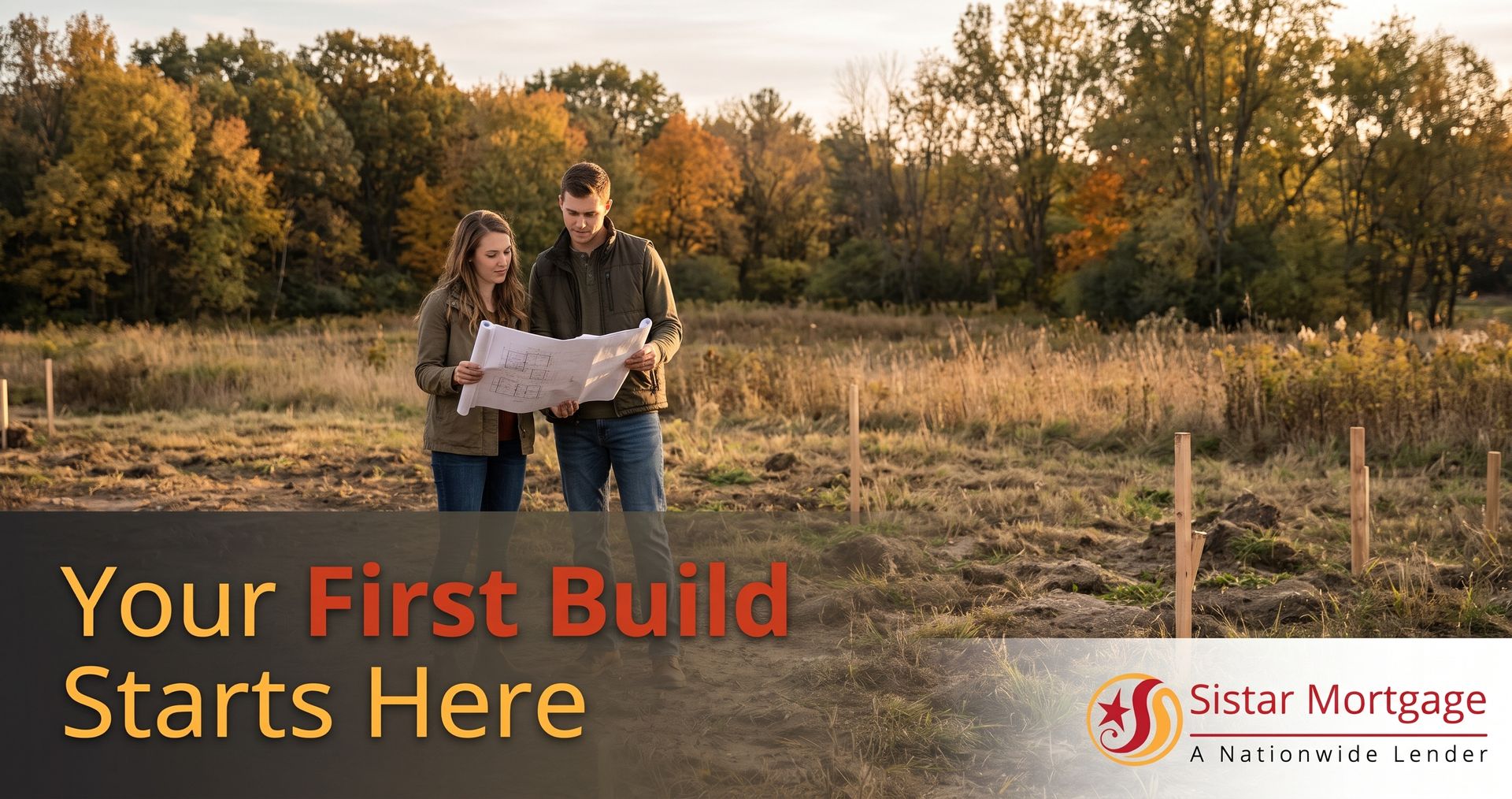
Single-Close Construction Loans for First-Time Homebuyers in Wisconsin
I talk to a lot of Wisconsin buyers who assume building a home is something other people do. People with more money, more experience, or a bigger down payment than they have. That assumption is wrong, and it costs them.
First-time homebuyers in Wisconsin can qualify for single-close construction loans, including FHA options that require as little as 3.5% down and USDA options with no down payment at all for eligible rural properties. The key difference from a standard purchase loan is that the lender evaluates two things: you and the project. That means your builder's credentials, the build timeline, and the construction budget all factor into the approval. It sounds like more, but it's manageable when you approach it in the right order.
Getting prequalified before you pick a floor plan is the single most important step a first-time builder can take. Most people do it backward. They fall in love with a design, find a builder, and then call about financing. By then, the numbers may not work the way they expected.
This guide covers what Wisconsin first-time buyers need to know about single-close construction loans: what lenders look at, how to get prequalified, the mistakes that derail first-time builders, and what the process looks like from start to move-in.
Can First-Time Buyers Get a Single-Close Construction Loan in Wisconsin?
Yes. There is no rule that says you need prior homeownership experience to build. A single-close construction loan wraps the construction phase and the permanent mortgage into one loan with one closing. You qualify once, lock your terms, and the loan converts automatically when the build is complete. No second application. No re-qualifying after the house is finished.
What makes it accessible for first-timers is the government-backed program options. Wisconsin buyers have real choices when it comes to down payment requirements.
What Lenders Look at for First-Time Builders
When you apply for a construction loan, the lender underwrites two things simultaneously: your financial profile and the project itself. For first-timers, that second layer is where most of the questions come from.
Your financial profile covers the familiar ground:
- Credit score and credit history
- Debt-to-income ratio (DTI)
- Employment history (typically two years of consistent income)
- Assets and reserves
The project review adds a second layer specific to construction:
- Builder credentials: The lender will vet your builder. They need to be licensed, insured, and in most cases approved by the loan program. FHA, for example, requires an FHA-approved builder.
- Construction contract and timeline: The lender reviews the signed contract between you and your builder, including the project cost breakdown and estimated completion date.
- Appraisal based on plans: Instead of appraising an existing home, the lender orders an appraisal based on your blueprints and specs. This determines the loan amount.
None of this disqualifies first-timers. It just means the paperwork is more involved than a standard purchase loan. Having a lender who specializes in construction financing makes a significant difference here.
How FHA and USDA Options Lower the Barrier to Entry
Two government-backed programs make construction financing genuinely accessible for Wisconsin buyers who don't have a large down payment saved.
FHA Single-Close Construction Loan:
- Minimum 3.5% down payment with a 580+ credit score
- Must use an FHA-approved builder
- Available for stick-built homes, modular homes, and new manufactured housing
- Sellers and builders can contribute up to 6% toward closing costs
- FHA loan limits in Wisconsin use the standard single-family ceiling of $524,225 for most counties in 2026, with higher limits in select Dane and Milwaukee-area counties
USDA Construction Loan:
- No down payment required for eligible rural properties
- Property must be in a USDA-eligible area (large portions of Wisconsin qualify, including many areas outside Milwaukee, Madison, and Green Bay)
- Income limits apply based on household size and county
- Check property eligibility at the USDA eligibility site
A Wisconsin-specific note: First-time buyers using FHA financing may also be able to layer in WHEDA programs for additional support. WHEDA's Easy Close DPA offers up to $10,000 in down payment and closing cost assistance as a deferred second mortgage at 0% interest. This is separate from construction financing but worth exploring if you're planning to build and need help covering upfront costs. Talk to a lender who knows both programs before assuming they can or cannot be combined.
If you already own land in Wisconsin, that equity can count toward your down payment requirement, which changes the math considerably for buyers who have a lot but haven't started building yet.
How to Get Prequalified for a One-Time-Close Construction Loan in Wisconsin
Prequalification for a construction loan is more involved than for a standard purchase loan. With a purchase loan, the lender is evaluating you and a home that already exists. With a construction loan, there is no home yet. The lender is evaluating you and a project that exists only on paper.
That's not a problem. It's just a different process, and knowing what to expect makes it far less intimidating.
What Prequalification Covers (and What It Doesn't)
Prequalification gives you a realistic picture of what you can borrow based on your income, credit, and debts. It tells you the loan amount you're likely to qualify for and which programs fit your situation.
What prequalification does not do: it does not lock your rate, it does not commit the lender to a specific loan, and it is not the same as full approval. Full approval (underwriting) happens after you have a signed builder contract, finalized construction plans, and a completed appraisal based on those plans.
Think of prequalification as your starting point, not your finish line. It tells you what's realistic before you spend time and energy on plans that may not fit your budget.
Documents You'll Need Before You Start
Gathering these before your first conversation with a lender speeds up the process considerably:
- Last two years of W-2s or tax returns (self-employed borrowers will need full returns)
- Last two to three months of pay stubs
- Last two to three months of bank statements
- Government-issued ID
- List of current debts (auto loans, student loans, credit cards)
- If you own land: documentation of the property and any existing liens
You do not need a builder selected or plans drawn before getting prequalified. In fact, getting prequalified first is the better approach. It tells you what budget to hand your builder before anyone starts designing.
Why Prequalification Is Different for Construction Than for Purchase
With a purchase loan, the appraisal is based on a home that exists. The lender can compare it to recent sales in the area. With a construction loan, the appraisal is based on your plans and specs, a process called an "as-completed" appraisal.
This means the lender needs to see a detailed construction budget. If the appraisal comes in lower than the total project cost, you may need to cover the gap out of pocket. This is one reason why having a realistic contingency budget matters, and why working with a lender who understands construction financing from the start protects you from surprises later.
Common Mistakes First-Time Builders Make in Wisconsin
Most of the problems I see with first-time builders are not financial. They're sequencing errors. The right information at the wrong stage of the process creates real headaches.
Falling in Love with a Floor Plan Before Checking Financing
This is the single biggest mistake. A buyer finds a plan they love, spends weeks working through details with a designer or builder, and then discovers their budget doesn't support it. Now they're either starting over or trying to cut features they've already mentally moved into.
The financing should drive the design, not the other way around. Know your number first. Then find a floor plan that fits it.
Choosing a Builder Before Talking to a Lender
Not every Wisconsin builder is approved for every loan program. FHA single-close loans require an FHA-approved builder. If you've already committed to a builder who isn't approved, you either need to convince them to get approved (a process that takes time) or switch builders.
Getting prequalified first also tells you what to look for in a builder. You'll know your budget, your program, and any specific requirements before you start interviewing contractors.
Underestimating the Contingency Budget
Construction costs change. Material prices shift. Timelines extend. Unexpected site conditions emerge, especially on raw land in Wisconsin where soil conditions, grading requirements, and utility hookup distances can add costs that weren't in the original estimate.
A standard contingency for new construction is 10% to 15% of the total project cost. First-time builders often skip this or underestimate it. If the project runs over and you've borrowed to the limit of your approval, covering the gap comes out of pocket. Build the contingency into your budget from the beginning.
Key point: The lender is not your only protection against budget overruns. You are. A realistic contingency budget is one of the most important things a first-time builder can put in place before breaking ground.
What to Expect from Prequalification to Move-In
The full timeline for a new construction build in Wisconsin varies by project, builder, and season. A realistic range for most single-family builds is 9 to 14 months from prequalification to move-in, though simpler builds on prepared lots can move faster and custom projects on raw land can take longer.
Here's how the stages generally sequence:
- Prequalification. You work with a lender to determine your budget, your program, and your qualification profile. This typically takes a few days to a week once you've gathered your documents.
- Find your land and builder. With a budget in hand, you can shop for a lot and interview builders who fit your program requirements. In Wisconsin, rural USDA-eligible areas often offer more affordable land options, while suburban markets around Milwaukee, Madison, and Green Bay have more builder inventory.
- Finalize plans and construction contract. Your builder prepares detailed plans, specs, and a cost breakdown. The lender orders the as-completed appraisal based on these documents.
- Loan approval and closing. Once underwriting is complete and the appraisal is in, you close. This single closing covers the lot (if you're purchasing it), the construction, and the permanent mortgage. You sign once.
- Construction phase. Your builder draws funds in stages called draws. Each draw is typically tied to a completed milestone and verified by an inspection. During this phase, most borrowers make interest-only payments on the funds that have been drawn so far.
- Certificate of occupancy and conversion. When construction is complete and the local municipality issues a certificate of occupancy, the loan automatically converts to your permanent mortgage. Principal and interest payments begin.
The construction phase is where first-time builders often feel the most uncertainty. Regular communication with your builder and your lender during this period makes a real difference. A lender who has managed construction draws before knows what to watch for and can keep the process moving.
Frequently Asked Questions
Can I get a construction loan if I've never owned a home before?
Yes. There is no requirement that you have prior homeownership experience to qualify for a single-close construction loan in Wisconsin. First-time buyers regularly use FHA and USDA construction programs. What matters is your income, credit, debt-to-income ratio, and the viability of the construction project.
What credit score do I need for a single-close construction loan in Wisconsin?
For an FHA single-close construction loan, the minimum credit score is 580 for the 3.5% down payment option. Some lenders may require 620 or higher depending on their overlays. Conventional construction loans typically require 680 or above. A higher score opens up more program options and better pricing.
How much down payment does a first-time buyer need for a construction loan?
It depends on the program:
- FHA: 3.5% down with a 580+ credit score
- USDA: No down payment for eligible rural properties in Wisconsin
- Conventional: Typically 5% to 20% depending on the lender and loan structure
- VA: No down payment for eligible veterans and active duty service members
If you already own land in Wisconsin, that equity can count toward your down payment, potentially reducing or eliminating the cash you need to bring to closing.
What is construction loan prequalification and how is it different from preapproval?
Prequalification is an initial assessment of what you're likely to qualify for based on the information you provide. It's faster and less formal than preapproval, which involves verified documentation and a credit pull. For construction loans, full approval (underwriting) comes later, after you have a signed builder contract, finalized plans, and a completed appraisal. Prequalification tells you what's realistic. Preapproval confirms it.
How long does the entire process take from prequalification to move-in?
For most Wisconsin single-family builds, plan on 9 to 14 months from prequalification to move-in. Prequalification and loan approval take weeks. The construction phase typically runs 6 to 12 months depending on the complexity of the build, the builder's schedule, and seasonal factors that affect construction timelines in Wisconsin. Starting the financing conversation in fall, for example, positions you well to break ground in spring.
Never built before? That's exactly where to start. Most first-time builders come to me before they have a builder, before they have land, and before they have plans. That's the right order.
Let's figure out what you qualify for before you pick a floor plan. Reach out at b.fabian@sistarmortgage.com, call or text at 262-794-7658, or apply directly here. Bob Fabian, NMLS #281274 | Sistar Mortgage, NMLS #68434.
This content is for educational purposes only and does not constitute a commitment to lend. Program guidelines, loan limits, and eligibility requirements are subject to change. Not all borrowers will qualify. Contact a licensed mortgage professional to discuss your specific situation.