Single-Close Construction Loans in Wisconsin When You Already Own the Land
I talk to Wisconsin land owners all the time who are sitting on a lot they bought years ago, maybe inherited from a family member, maybe picked up when prices were lower out in Waukesha County or up near the Northwoods. They come in ready to build. And almost every one of them asks the same question: do I need to come up with a full down payment on top of the land I already paid for?
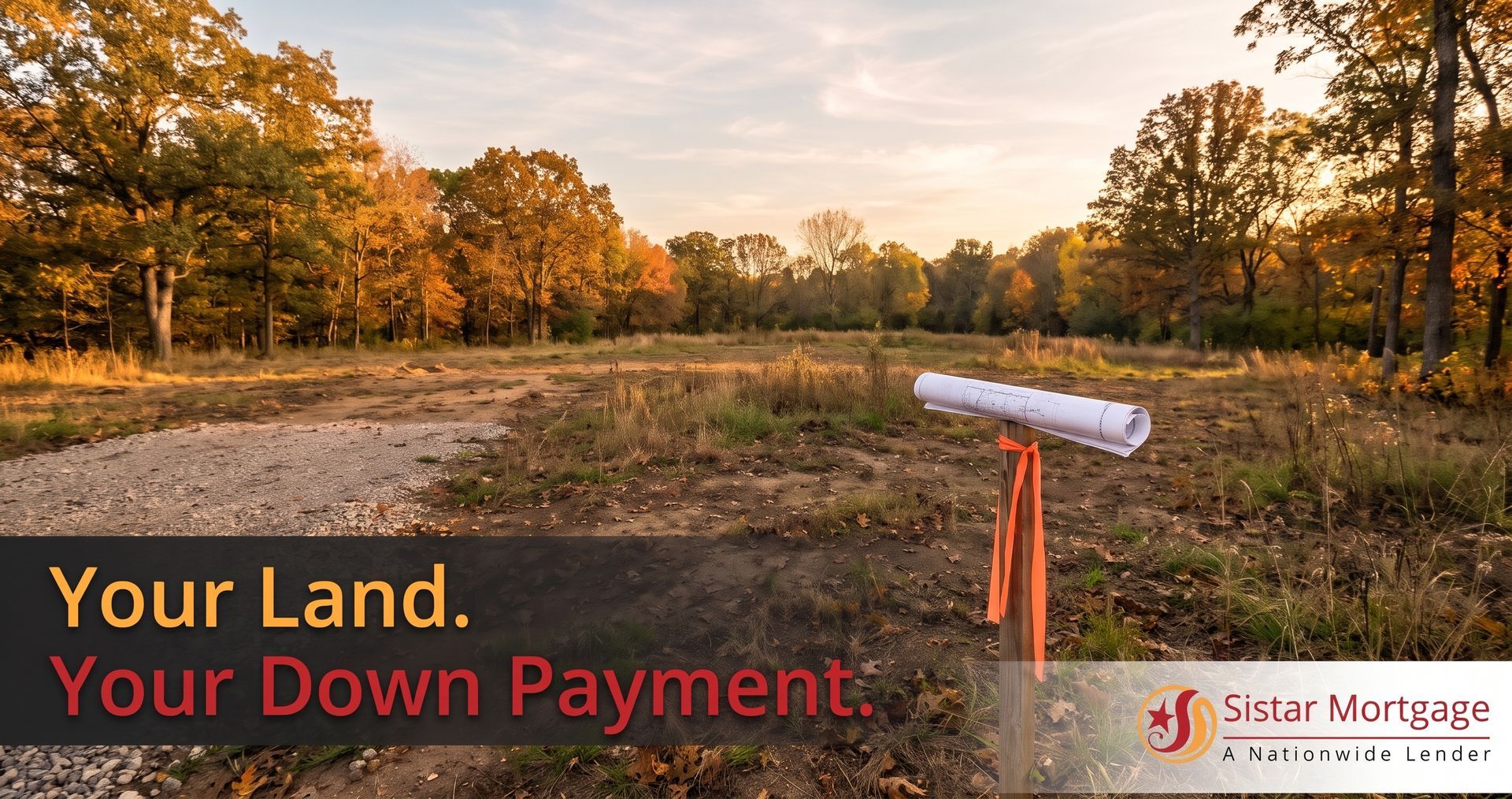
The answer is no. Your land is already working for you. Most people just do not know how to make the lender see it that way.
If you already own land in Wisconsin, you can typically use its equity as part or all of your down payment on a single-close construction loan. The lender will appraise the lot, credit that equity toward your required contribution, and roll the land value, construction costs, and permanent mortgage into one loan with one closing.
Here is how it all works.
How Land Equity Works as a Down Payment
How lenders calculate your land's contribution
The lender does not care what you paid for the lot, and they definitely do not care what the tax assessment says. They will order a current appraisal of the land, and that appraised value is what counts.
Once the appraisal comes in, the lender calculates your total project cost: land value plus construction costs. Your land equity is then measured as a percentage of that total. If the math puts you at or above the required down payment threshold, you may need little to no additional cash to close.
Here is a real-number example:
- Land appraised value: $80,000
- Construction cost: $320,000
- Total project cost: $400,000
- Required down payment (20% conventional): $80,000
- Land equity contribution: $80,000
- Additional cash required at closing: $0
That is a full 20% down payment covered entirely by the lot you already own. No liquidating savings. No waiting to accumulate more cash.
The numbers shift depending on your loan program. Conventional loans typically require 10 to 20 percent down on the total project. FHA construction loans require 3.5 percent with a 580 or higher credit score. VA single-close construction loans require zero down for qualifying veterans. If your land equity exceeds the minimum required contribution for your program, the excess does not disappear: it builds immediate equity in your finished home from day one.
What happens if the land is fully paid off vs. still financed
If you own the land free and clear, the full appraised value counts as equity. Clean and simple.
If you still have a loan on the land, the math changes. The lender looks at your actual equity: appraised value minus whatever you still owe on the lot. That net figure is what gets credited toward your down payment. In some cases, the construction loan will pay off the existing lot loan at closing and roll everything into the new single loan. Ask your lender specifically how they handle this, because not every program works the same way.
Single-Close vs. Two-Close When You Own the Land
Why the single-close structure is especially valuable for land owners
A single-close construction loan, also called a construction-to-permanent loan or one-time-close, combines the construction financing and the permanent mortgage into one loan with one closing. You qualify once, sign once, and pay closing costs once.
A two-close approach means a separate construction loan first, then a second full closing when you convert to a permanent mortgage.
Two sets of closing costs, two rounds of underwriting, and a second approval process when the home is nearly done. For a Wisconsin land owner who already has the lot, the two-close path adds cost and complexity without adding any benefit.
Avoiding double closing costs on lot and construction
Single-close construction loans save Wisconsin borrowers an estimated $2,000 to $4,000 in duplicate closing costs compared to the two-close approach. Beyond the savings, there is a rate exposure question: with a two-close loan, your permanent financing is not locked until the second closing. If rates move significantly during your build, you are exposed.
The single-close structure locks your permanent rate terms at the first closing, so you know what you are converting to before a single nail is driven.
For land owners, this matters even more. You have already made one major financial commitment on this project. The single-close structure keeps the rest of it tidy.
Finding Lenders That Finance the Lot and the Build Together in Wisconsin
Why not every lender handles lot-plus-build financing
Construction financing is a specialty product. Most large retail banks and online lenders treat it as a side offering, and many simply do not have programs that allow land equity to substitute for a cash down payment. Some lenders will finance the construction but require you to handle the land separately. That is where people get into trouble: they assume any lender who says "yes" to construction loans means "yes" to their specific situation.
Wisconsin has a reasonable number of lenders with active construction programs, but the ones that handle land-plus-build financing in a single loan, and credit land equity toward the down payment, are a shorter list. Sistar Mortgage has been doing new construction financing for decades and is licensed throughout Wisconsin. We handle construction-to-permanent loans specifically designed for land owners, including scenarios where the lot still has an existing balance.
What to ask a lender before you apply
Before you commit to a lender, get answers to these questions:
- Do you allow land equity to substitute for a cash down payment on a single-close construction loan?
- How do you calculate land equity: appraised value or purchase price?
- Will you pay off an existing lot loan at closing and roll it into the construction loan?
- What is the maximum loan-to-value you allow on total project cost?
- Do you offer VA or FHA single-close construction options for Wisconsin borrowers?
- How long is your typical draw period, and how many draws are allowed?
If a lender cannot answer those questions clearly, that is your answer.
What You Need to Qualify in Wisconsin
Documentation specific to land owners
Land ownership adds a layer of documentation to the standard construction loan file. Plan to provide:
- Current deed showing you hold title to the lot
- Any existing lot loan payoff statement (if the land is still financed)
- A copy of your purchase contract or settlement statement showing what you paid for the land
- Builder contract and construction cost breakdown (signed)
- Approved building plans and specifications
- Proof of builder licensing in Wisconsin
- Standard income, asset, and credit documentation
The lender will order the land appraisal themselves. You do not need to bring one in, but if you had an appraisal done recently, share it. It gives the loan officer a starting point and can speed up the process.
How the land appraisal affects your loan amount
The appraisal does two things. First, it establishes the land's current market value, which determines how much equity you are bringing in. Second, the lender will also order an "as-completed" appraisal of the finished home based on your plans and local comparable sales. The loan amount is underwritten against the lower of the total project cost or the as-completed appraised value.
This is important: if your construction costs run high relative to what comparable finished homes sell for in your Wisconsin market, the lender may cap the loan below your total project cost. That gap becomes your out-of-pocket responsibility. It is one of the reasons getting the financing figured out before finalizing your build contract matters. I have seen people fall in love with a floor plan, sign a builder contract, then discover the numbers do not work the way they expected. Get the appraisal conversation started early.
Frequently Asked Questions
Can I use land I already own as a down payment on a construction loan?
Yes. If you own land in Wisconsin, a lender will appraise the lot and credit the equity toward your required down payment on a single-close construction loan. The land value, construction costs, and permanent mortgage are all rolled into one loan at one closing.
Does the land need to be paid off to count toward my down payment?
No. The land does not need to be free and clear. The lender calculates your net equity: appraised value minus any remaining lot loan balance. That net figure is what counts. If you still owe on the lot, many construction lenders will pay it off at closing as part of the new loan.
What if I still have a loan on the land?
Your construction loan can often pay off the existing lot loan at closing. The remaining balance gets rolled into the new single-close loan. The key is that your net land equity, after the payoff, still needs to meet the lender's minimum contribution requirements for your loan program.
Can I get a construction loan that covers both the lot purchase and the build?
Yes. If you do not yet own the land, a single-close construction loan can include the lot purchase as part of the financing. The lender funds the land acquisition at closing, then releases construction draws as building progresses. This is a common structure for Wisconsin borrowers who have identified a lot but have not yet purchased it.
How long do I have to have owned the land before I can use it for a construction loan?
There is no universal seasoning requirement for land ownership. Some lenders have their own guidelines, but many will credit land equity regardless of how long you have owned it. What matters is the current appraised value and your clear title. If you recently purchased the lot, the lender may use the lower of the purchase price or the appraised value, depending on their program. Ask your lender directly.
Already own land in Wisconsin and ready to build? Let's figure out what your lot is worth toward your loan. Apply here or call Bob directly at 262-794-7658.